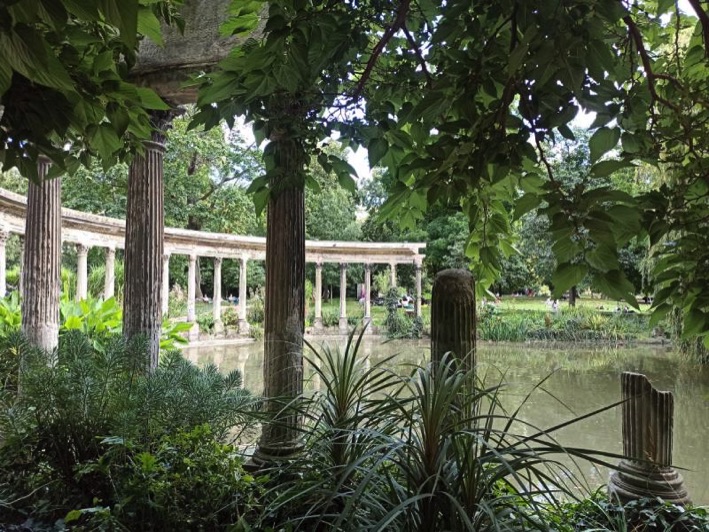
This park which covers today an area of 20 acres is a small portion of a much bigger park which was originally created just a decade before the French Revolution by Louis-Phillippe d'Orléans (1747-1793), Duke of Chartres, a cousin of King Louis XVI, as a private garden just outside an architectural "folly" that he had built. The intention of the garden was to surprise and amaze visitors through a variety of objects such as a miniature ancient Egyptian pyramid, a Roman colonnade, antique statues, a Dutch windmill, a temple of Mars, an enchanted grotto, to name just a few...
Parc Monceau & 17th district
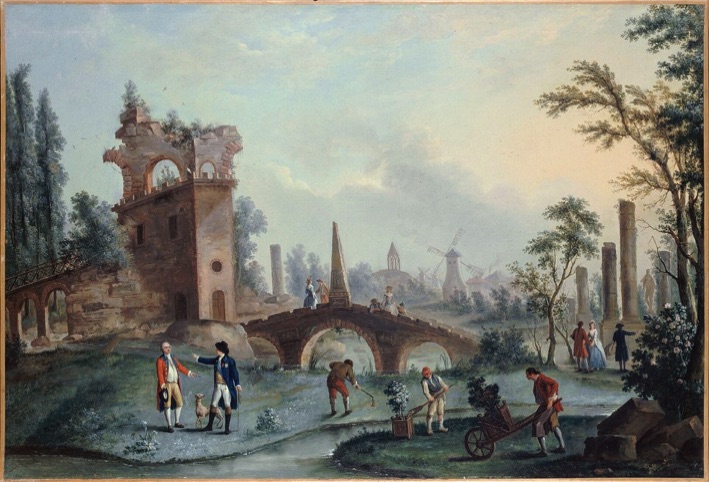
The Duke of Chartres receiving the keys of his newly created garden from the hands of Carmontelle,
the garden designer, who immortalized the moment (and himself) in this painting done by him in 1779.
This park was confiscated and made property of the state at the Revolution.
It was remodeled several times (the folly was destroyed) and turned into a public garden.
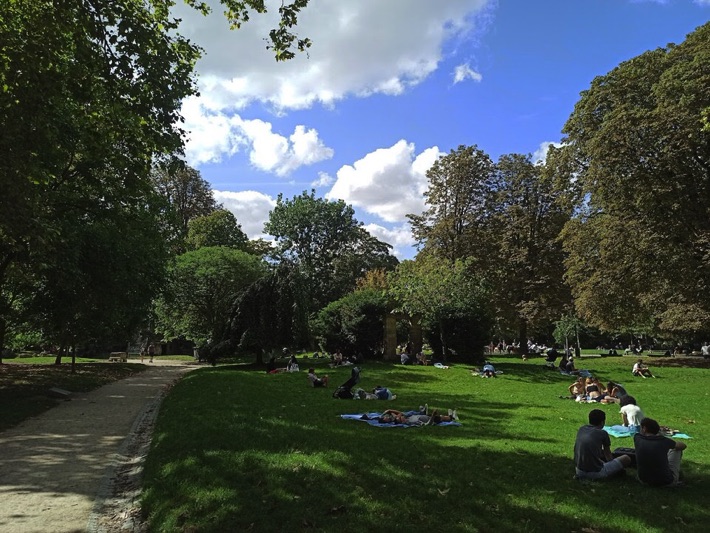
This tour is one of my favorite in Paris because it takes place outdoors in an exquisite garden
to start with and afterwards in a beautiful residential area filled with incredible buildings.
Nearby there's a big square where Alexandre Dumas father and son are both honored with statues:
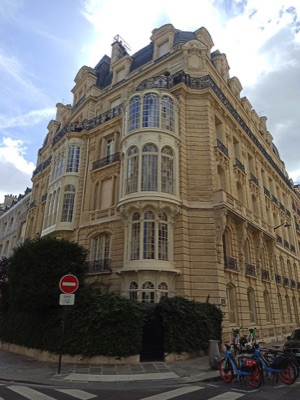
At the same time, the land surrounding the park was attributed to the richest families of the second half of the 19th Century (Rothschild, Cernuschi, Camondo, Menier...) where they built beautiful and gigantic houses that still exist today. Most of them have later been divided into condos or deluxe offices but some of them have been donated to the state and have been turned into museums named after their donators (Jacquemart-André, Cernuschi, Nissim de Camondo). We can pop into one during our tour if you wish!
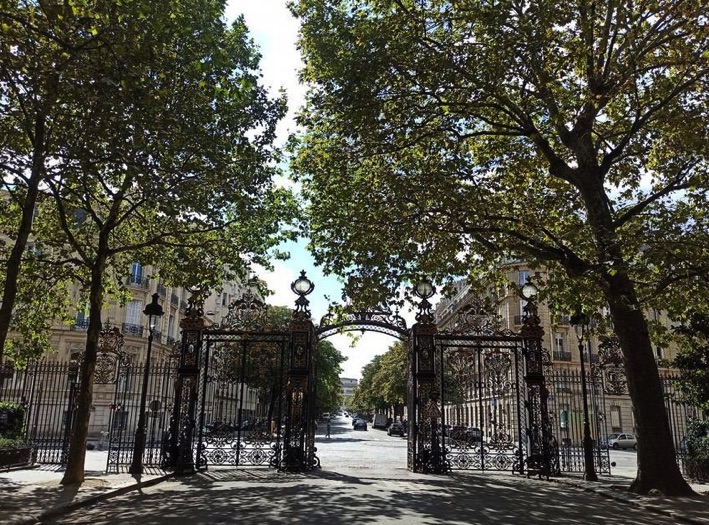
FYI it's the Arch of Triumph that you can (more or less) see in the center at the end of the avenue!
Otherwise, after we have visited this beautiful park (my personal favorite in Paris)
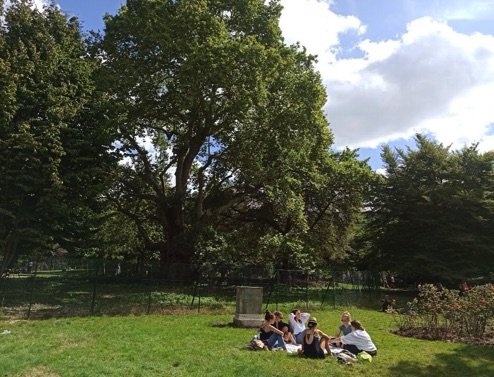
and looked at the remains of the folly's garden, the sculptures added since and the remarkable trees planted in the 19th Century (look below at this unique plane tree in the background),
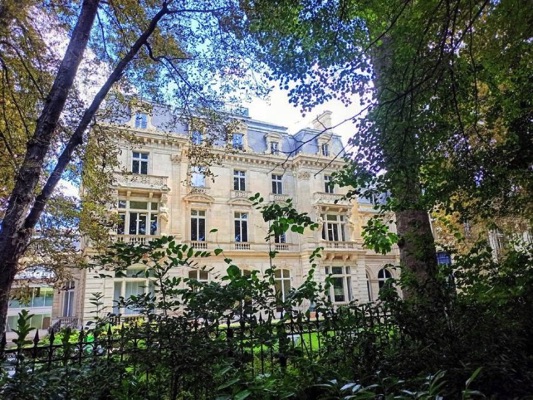
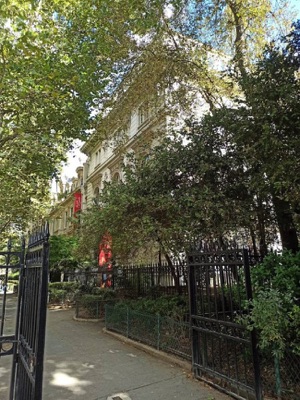
I will take you to the streets nearby to see some incredible buildings which where buit for rich industrials,
writers (Alexandre Dumas father and son) or some of the most famous courtesans of the time
(such as Sarah Bernhardt, La Belle Otero and many others!).
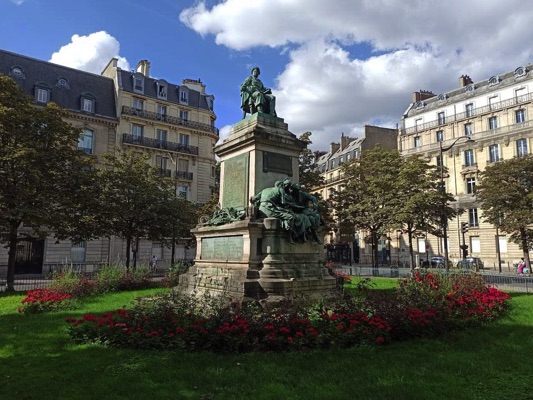
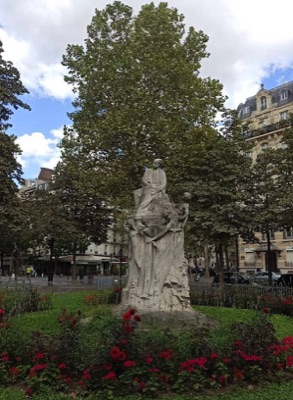
Alexandre Dumas, father... and son.
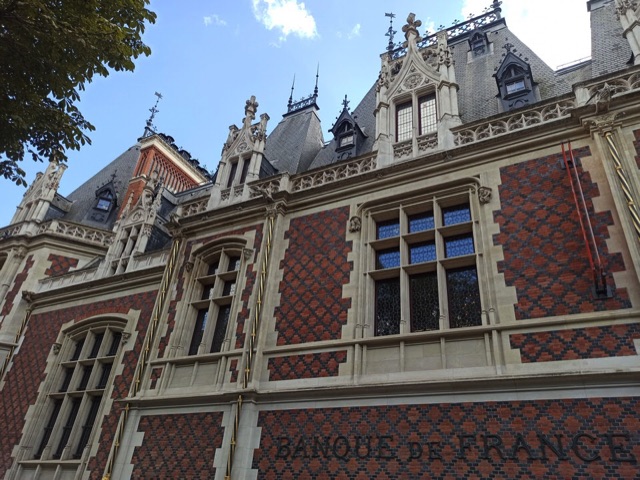
It draws its inspiration from French Renaissance buildings in the Loire Valley, in particular from the château of Blois which the owner, Émile Gaillard, a rich banker, admired very much.
Some of the details of the façade are quite charming:
Its actual appearance was organized during the second Empire of Napoleon III.
Look at the gorgeous gates which were created then:
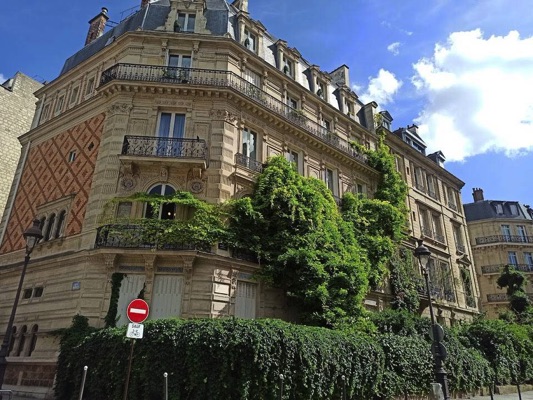
And on that same square, you find this incredible huge building:
At his death in 1904, his mansion was put up for sale by his heirs but, as they couldn't find a buyer who had what it takes, it was in the end purchased in 1919 by the Banque de France (the national central bank) in order to turn it into one of its branches. A huge vault (which can still be visited!) was created inside for the occasion. This branch was closed in 2006. The building re-opened
in 2019 as the Cité de l'économie (or Citéco), a museum dedicated to the economy.
I wouldn't put this museum at the top of your list: the inside was way too modernized to my taste (with huge LCD screens almost everywhere!) but, if you have the will and the time,
we could pop in for a short while to see rather unusual and interesting rooms. In other to find out
if you might be interested, you can click on this link in order to do a virtual tour of the inside.
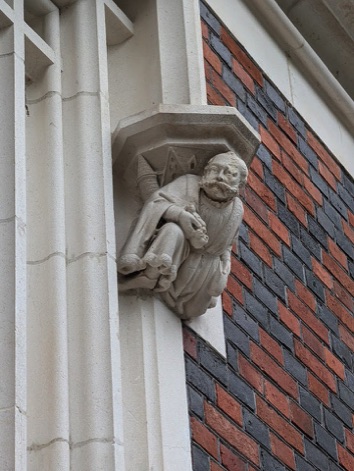
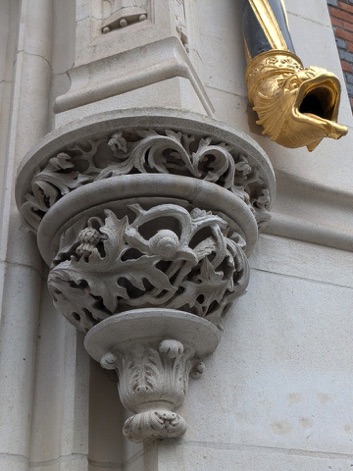
Like Gaillard himself. Did you spot the snail ?
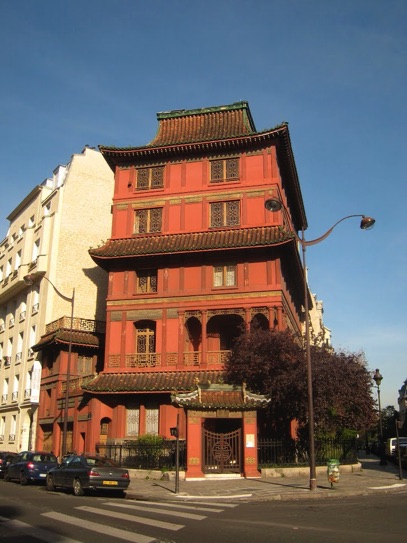
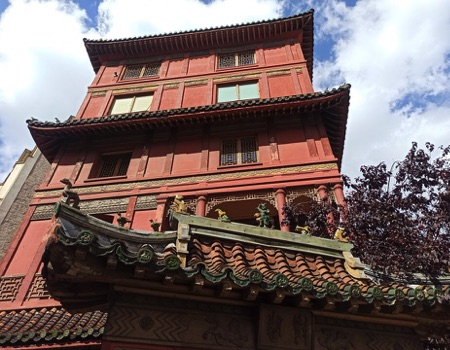
Another unique building is this Chinese folly of the early 20th century:
It was built for a Chinese antique dealer
and is known as "Maison de Loo"!
(it was the owner's name... 🙄).
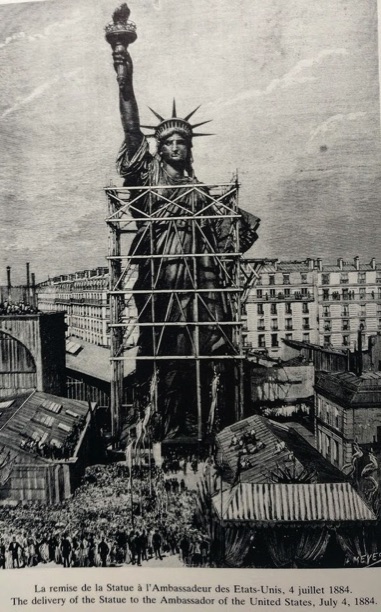
And at the end of the tour (if you wish and
if we have time), I can bring you to the exact spot where the Statue of Liberty was assembled for the first time
(you know us: we had to give it a try... 😇).
There's nothing to see on that spot today (that why I said "if you wish") but,
thinking about it, you can't help thinking:
"it must have been something"...
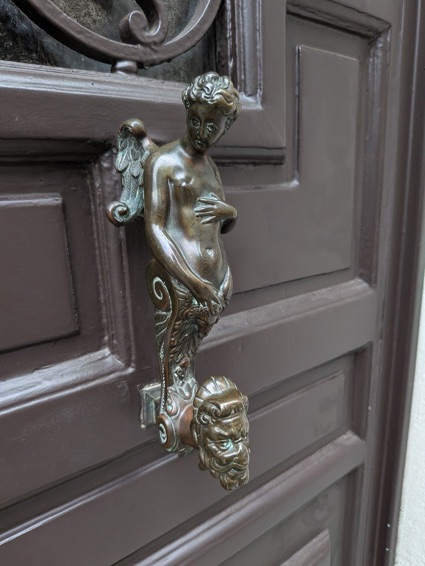
I could go on for hours (but only when I see you). Ah, one last thing: on this tour, it will be a festival of beautiful doorknobs galore!