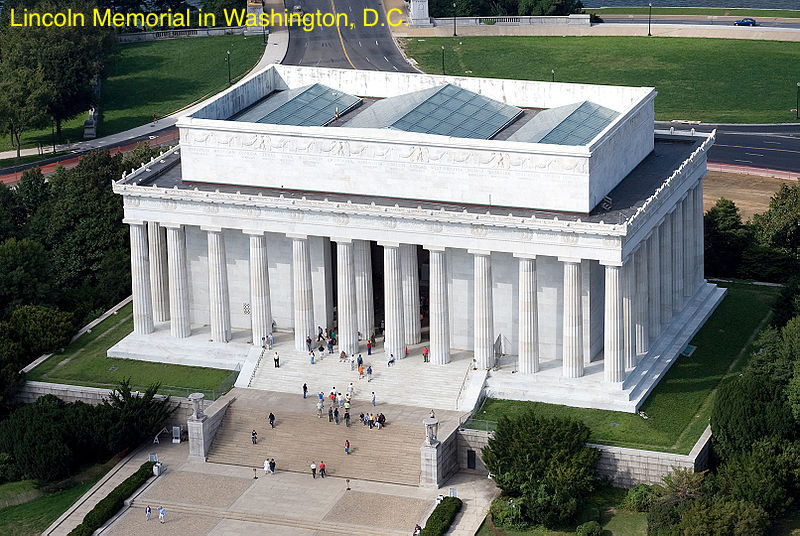
Did you know that the term « Gothic » was coined by an Italian architect in the 16th century as a pejorative to manifest his horror towards the architectural style of the Middle Ages that everybody hated at the time because the only valid reference aesthetically was the classical Greco-Roman style (which persisted until our modern times as they were still using it in the early 20th Century for official buildings like the Lincoln Memorial in Washington, D.C.). Thus did the Italians (and the French afterwards) show their disdain of the dark buildings of the Middle Ages by naming the art which preceded them after the Goths, the barbarians whose brutality ended the Roman civilization…
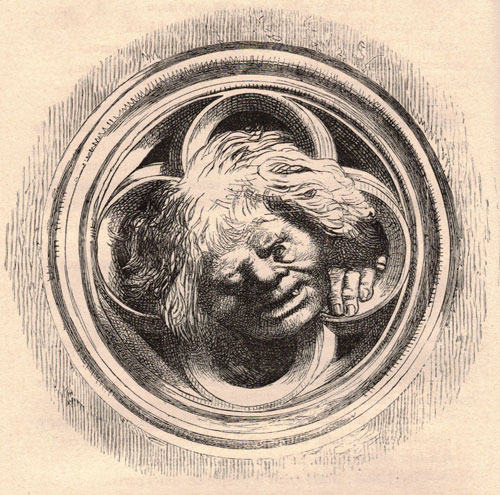
It is true that the Renaissance has left us with some of the most exquisite buildings to visit (go to Italy or, even better for me, go to the Loire Valley, you won’t regret it) but, luckily (and mostly thanks to Victor Hugo's Quasimodo), Notre-Dame was restored and gothic art was re-established at the end of the 19th Century. There even was a gothic revival! The American church and the American cathedral of Paris are two of its best examples.
For me, the ultimate gothic church, for its architecture and its stained glass, is the Chartres cathedral.
Amiens, Bourges, Strasbourg come close but Chartres is closer to Paris and has more stuff of what dreams are made of...
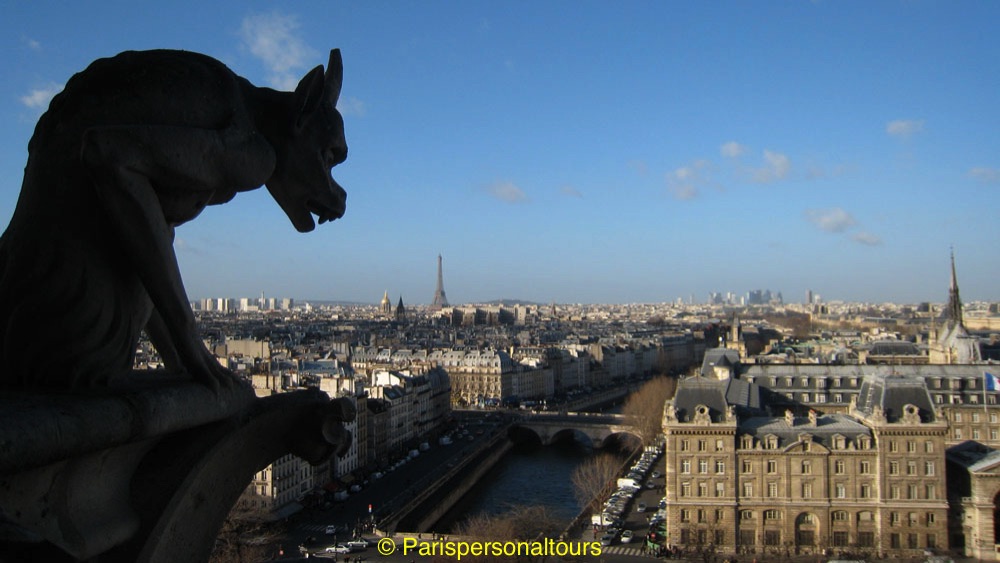
Notre-Dame in Paris has recently become a very special case. It's without any doubt a landmark in gothic architecture, as it's one of its first and most famous examples, but, even though its façade, proportions and volumes are gorgeous and unique, I consider it as out-of-competition compared to other churches because, after the ravages of the French Revolution, it was so heavily restored (and, in some areas, completely rebuilt) in the middle of the 19th Century that it doesn't fit the gothic norm of the Middle-Ages anymore.
And today it has even surpassed the Neo-gothic inventions of Viollet-le-Duc of the 19th Century (which, after the recent brilliant restaurations, have spectactularly come back to life) by adding even more to it: I'm talking of the brand new (and very ostentatious) reliquary for the Holy Crown of Thorns at the back of the cathedral and also, more than anything, of the numerous over-present new spotlights which light up the inner vaults with the same bright artificial light, no matter the day or the time of day... For me, the fact that the cathedral has no longer dark areas or dark times of the day have just made it lose it's gothic soul... In the eyes of the original gothic builders, artificial man-made light was never meant to compete with the Divine light which is supposed to come from the outside through the colored stained glass... But, when you think that the bishops and canons of the 18th Century destroyed the beautiful original colored stained glass (as it had become opaque due to the dirt and they didn't know how to clean it) in order to replace it with clear glass because their priority was to have more light, it does make sense in a way to continue in that direction today...
Nevertheless, Notre-Dame of Paris is no longer a classic gothic "rooted in time" church like all the others.
Since it re-opened, Notre-Dame now stands on its own as the perfect example of a gothic 2.0 unique church.
It has finally become what it had always wanted to be right from the start (and wasn't until now): the modern flagship of the Catholic church. And, only if you realize and accept that, can you truly understand it and fully appreciate it.
Otherwise, yes, the Sainte-chapelle is a unique and incredible masterpiece of gothic architecture (and stained glass of course) but it's limited in space and doesn't provide an experience comparable to Chartres or Bourges.
And the ultimate gothic castle (also re-invented by Viollet-le-Duc in the 19th Century) is the Castle of Pierrefonds (near Paris).